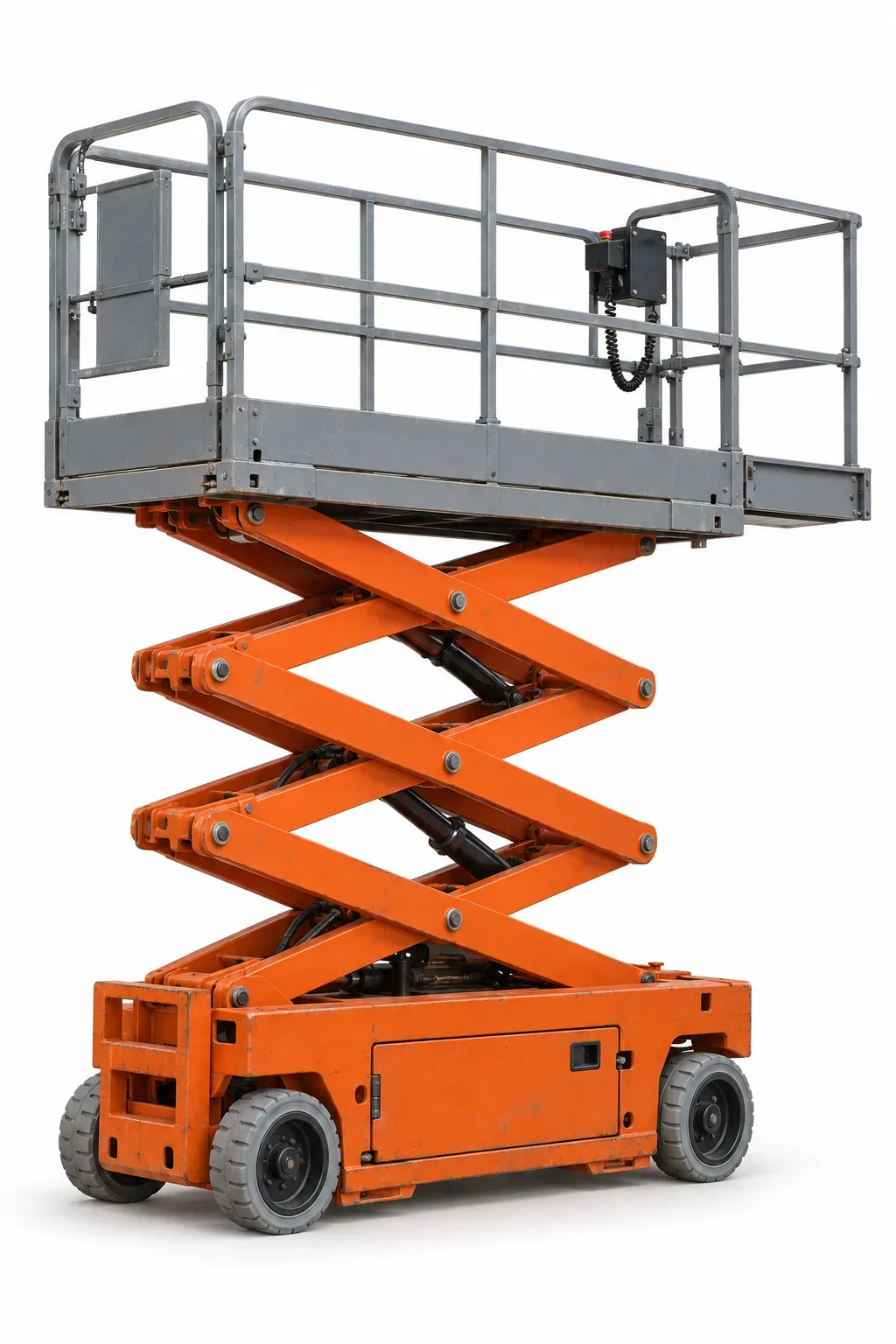
Where rough-terrain scissors fit
- Facade repairs, signage, and glazing along mixed pavement and soil
- Exterior MEP runs with frequent curb or grade changes
- Staging areas on compacted fill where slab access is limited
These units provide straight vertical access with wide platforms for tools and materials. They are often the practical choice when the machine must cross inconsistent ground before sitting below the work.
Columbia’s ground and weather considerations
The local Sandhills mix can include loose sand pockets and slow-draining clay. After rain, rutted sections and soft edges appear near drive lanes and staging pads. Plan turns on firmer ground and allow space for leveling and setup. Extended summer heat can favor engine-driven duty cycles outdoors, while shaded staging helps any battery-assist systems.
Sizing and site constraints
- Working height: confirm reach for upper facades, parapets, or canopy lines
- Platform dimensions: wider decks help with material handling but need more clearance
- Machine weight and ground bearing: coordinate with soil conditions and temporary pads
- Grade and approach: verify slopes, curb heights, and turning room around barriers
When a boom lift may be better
If the task sits behind landscaping, overhangs, or equipment where a straight vertical path won’t work, a boom lift reaches up and over. Articulating models handle obstacle navigation; telescopic models cover longer setbacks. See /boom-lift-rental/.
Actual conditions, the selected unit’s instructions, and site procedures govern exterior elevated work.